
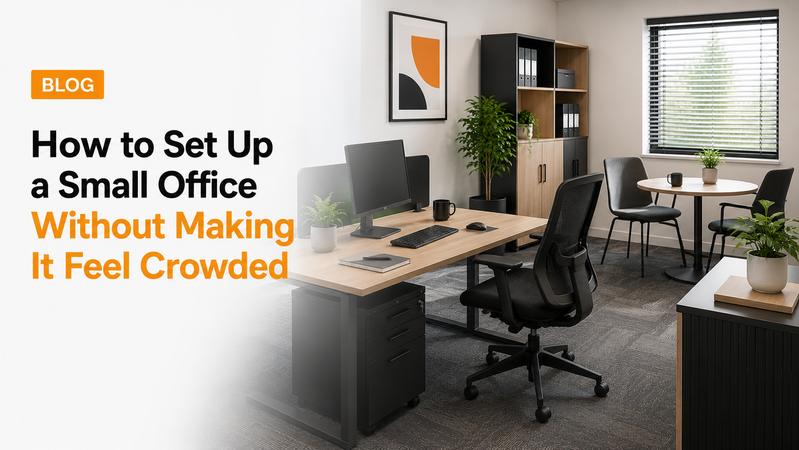
Not every business needs a huge office. In fact, with the right furniture and some careful planning, smaller workplaces can be comfortable, professional and highly productive. The challenge is making the most of the available space without filling every square metre with furniture. Here are some practical ways to create a small office that works.
Measure Before You Buy
Good small office design starts with accurate measurements. Before purchasing furniture, measure the entire room and note the position of:
- Doors
- Windows
- Power points
- Walkways
- Built-in storage
- Air conditioning
- Other permanent fixtures
Planning these elements before ordering furniture can prevent expensive mistakes.
Choose Desks That Suit the Space
A large desk isn't always necessary. Compact straight desks can provide plenty of working space while taking up considerably less floor area than oversized workstations. Think about what each employee actually needs on their desk and choose furniture accordingly.
Use Your Walls
When floor space is limited, vertical space becomes extremely valuable. Tall bookcases and cupboards can provide significant storage capacity without taking up much more floor area than lower storage units. Keeping storage against walls also helps maintain clear walkways through the office.
Reduce Individual Storage
Traditional offices often provided every employee with a large pedestal, filing cabinet or cupboard. Many modern businesses simply don't need this much individual storage. If most documents are digital, consider centralised storage instead. This can free up valuable space around individual workstations.
Keep Walkways Clear
An office can technically fit a certain number of desks without actually being comfortable to use. Employees still need to move around the workplace easily. Avoid placing storage units, chairs and furniture in areas that restrict natural movement through the office.
Use Screens Carefully
Office screens provide useful privacy and separation, but too many high screens can make a small room feel even smaller. Lower or lighter-coloured screens can define individual workstations without completely closing off the space.
Choose Lighter Finishes
Furniture colour can have a surprising impact on how large a workplace feels. Lighter timber finishes and neutral colours can help smaller spaces feel brighter and more open, particularly when combined with good natural lighting. Black frames and accents can then provide contrast without dominating the room.
Consider Flexible Furniture
If your office serves multiple purposes, furniture that can adapt can be particularly valuable. Mobile tables, compact meeting tables, height adjustable desks and movable storage can allow the same area to perform different functions throughout the week.
Don't Fill Every Available Space
One of the easiest mistakes to make is treating every empty wall or corner as somewhere to put furniture. Some empty space is a good thing. Giving furniture room to breathe can make even a relatively small office feel significantly larger and more comfortable.
Final Thoughts
A small office doesn't need to feel cramped. Choosing appropriately sized desks, smarter storage and flexible furniture can help businesses maximise their available space while maintaining a professional and comfortable working environment. Good office design isn't about how much furniture you can fit into a room. It's about making the available space work better.