
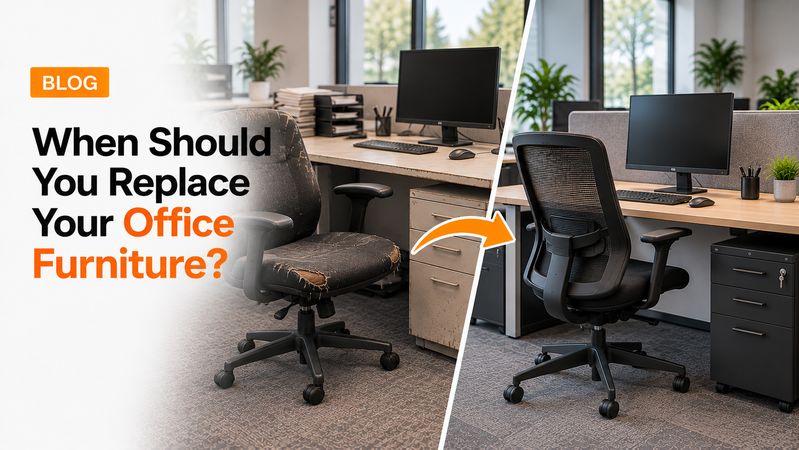
Office furniture doesn't come with an obvious expiry date.
A desk might still look fine after years of use, while an office chair can begin showing signs of wear much sooner. Knowing when to repair, reuse or replace furniture can help businesses maintain a safe, comfortable and professional workplace without replacing furniture unnecessarily.
Start With Condition, Not Age
Age alone doesn't determine whether office furniture needs replacing. A quality desk that has been well maintained may remain functional for many years, while heavily used furniture may wear much sooner. Look at the actual condition and performance of each item.
Signs an Office Chair May Need Attention
Office chairs contain moving components that experience regular wear.
Look for issues such as:
- A gas lift that no longer holds its height
- Damaged castors
- Loose arms
- Excessive movement in the mechanism
- Worn or damaged upholstery
- Reduced seat support
- Broken adjustment controls
Some components may be replaceable, so a problem doesn't always mean the entire chair needs to be discarded.
Check Desks and Workstations
Desks should remain stable during normal use.Loose frames, damaged desktops, broken edging and failing adjustment mechanisms can all indicate that repair or replacement should be considered.
Height adjustable desks should also move smoothly and remain stable at different working heights.
Storage Needs to Work Properly
Filing cabinets and cupboards can receive significant daily use. Check drawers, runners, locks, hinges and handles. Storage that is difficult to open or no longer functions properly can quickly become frustrating for employees.
Has Your Workplace Changed?
Furniture doesn't necessarily have to be damaged to stop being suitable. Your team may have grown, technology may have changed or the office layout may no longer support the way employees work. Sometimes replacing or reconfiguring furniture is about making better use of the workplace rather than dealing with worn-out products.
Consider Repair Before Replacement
Replacing an entire piece of furniture isn't always necessary.
Depending on the product, castors, gas lifts, arms and other chair components may be replaceable. Existing desks and storage may also be able to be incorporated into a redesigned layout.
Presentation Matters Too
Furniture contributes to how employees, customers and visitors perceive a workplace.
Heavily damaged, mismatched or visibly worn furniture can make an otherwise professional office look tired. Updating selected pieces can sometimes refresh a workplace without requiring a complete fitout.
Replace Strategically
If an entire office can't be updated at once, prioritise furniture receiving the heaviest use.
Task chairs and everyday workstations will generally have a greater impact on employees than furniture used occasionally.
Final Thoughts
Office furniture should be assessed based on condition, functionality and whether it still suits the workplace. Regularly checking chairs, desks and storage can help identify problems early and allow businesses to decide whether repair, reconfiguration or replacement makes the most sense.