
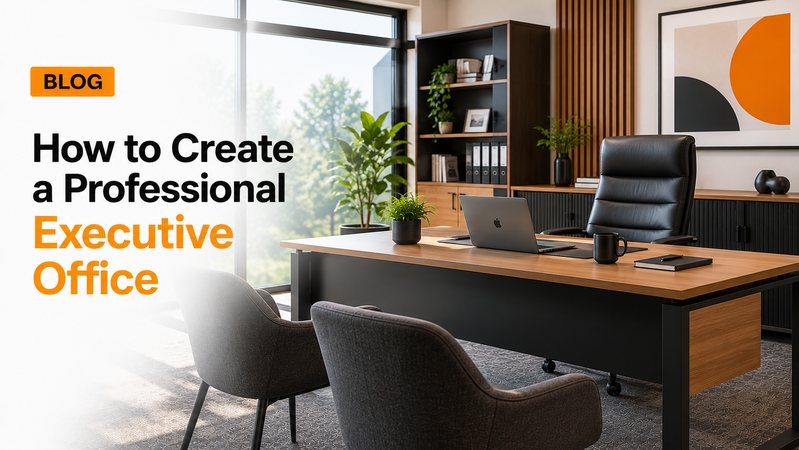
An executive office needs to do more than simply look impressive.
For many managers, directors and business owners, the office is a personal workspace, meeting room, video conferencing space and storage area all in one.
The right furniture can bring these different requirements together without making the room feel oversized or overly formal.
Start With How the Office Will Be Used
Before choosing furniture, consider what actually happens in the room.
Does the person primarily work independently? Do clients regularly visit? Are small team meetings held there? Is a large amount of paperwork or equipment stored in the office?
The answers will help determine how much furniture is genuinely required.
Position the Desk Carefully
The desk will usually be the main feature of an executive office.
Rather than automatically placing it against a wall, consider how the position affects movement, natural light and meetings.
There should be enough space to move comfortably around the desk without blocking doors, cupboards or visitor seating.
Choose the Right Desk Style
Executive desks are available in everything from clean, contemporary designs through to larger desk-and-return configurations.
A larger desk can provide additional working space, but it needs to suit the proportions of the room.
In a smaller executive office, a streamlined desk with separate storage can often create a more open appearance.
Add Practical Storage
An executive office can quickly become cluttered if storage isn't considered.
Credenzas, cupboards, bookcases and mobile pedestals can provide space for paperwork, personal items and equipment while keeping the main desk relatively clear.
Storage can also provide a useful surface for printers, displays or other equipment.
Create a Space for Visitors
If meetings regularly take place in the office, consider dedicated visitor seating.
Two comfortable visitor chairs can be enough for informal discussions without requiring a separate meeting table. For larger rooms, a small meeting table can create a dedicated discussion area away from the main desk.
Think About Video Meetings
Video calls are now a normal part of the working day.
Consider what appears behind the desk, where natural light comes from and where monitors or cameras will be positioned. A well-planned furniture layout can help create a professional background without requiring major changes to the room.
Keep the Design Consistent
Executive furniture doesn't have to be completely different from the rest of the workplace.
Using complementary finishes can help the executive office feel connected to the overall office while still giving it its own character.
Final Thoughts
A good executive office should balance presentation with everyday practicality.
Choose furniture based on how the room will actually be used, provide enough storage to control clutter and leave sufficient space for people to move comfortably.