
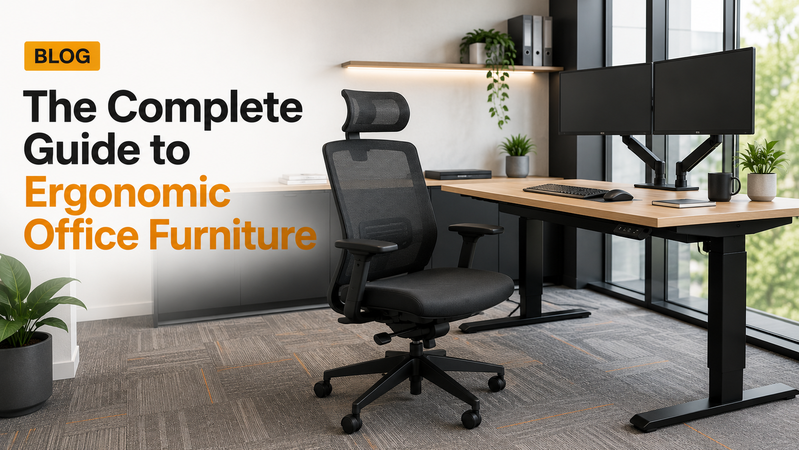
When people hear the word ergonomic, they often think about office chairs. In reality, ergonomic office furniture is about creating a workspace that supports the body, improves comfort and helps employees perform at their best throughout the day.
Whether you're working from home or managing a large commercial office, investing in ergonomic office furniture can have a significant impact on productivity, wellbeing and workplace satisfaction.
What Is Ergonomic Office Furniture?
Ergonomic furniture is designed to support the natural posture and movement of the human body.
The goal is to reduce physical strain, improve comfort and minimise the risk of workplace injuries caused by prolonged sitting or poor workstation setup.
Good ergonomic design helps people work more comfortably and efficiently.
Why Ergonomics Matters
Many office workers spend more than seven hours per day sitting at a desk.Poor posture and unsuitable furniture can contribute to:
- Back pain
- Neck strain
- Shoulder discomfort
- Fatigue
- Reduced productivity
Providing employees with properly designed furniture helps create a healthier and more productive workplace.
Choosing the Right Office Chair
An ergonomic chair is one of the most important investments in any office.Look for features such as:
- Adjustable seat height
- Lumbar support
- Adjustable armrests
- Seat depth adjustment
- Breathable materials
The right chair should support the user throughout the day while encouraging healthy posture.
Sit-Stand Desks
Sit-stand desks continue to grow in popularity for good reason.
They allow users to alternate between sitting and standing throughout the day, promoting movement and reducing the risks associated with prolonged sitting.
Height-adjustable desks can help improve comfort, circulation and energy levels.
Monitor Positioning Matters
Even the best chair and desk setup can be undermined by poor monitor placement.
Monitors should be positioned at eye level and approximately an arm's length away from the user.
Monitor arms provide flexibility and help create a cleaner, more adaptable workspace.
Accessories That Make a Difference
Small ergonomic improvements often deliver significant benefits.Popular accessories include:
- Monitor arms
- Footrests
- Keyboard trays
- Laptop stands
- Anti-fatigue mats
These products can help tailor workstations to individual needs and improve overall comfort.
Ergonomics and Productivity
Comfortable employees are generally more focused, more engaged and more productive. When staff spend less time dealing with discomfort, they can concentrate on delivering better results.
Ergonomic furniture should be viewed as an investment in people, not simply an office expense.
Final Thoughts
Creating an ergonomic workspace doesn't need to be complicated. By selecting the right chair, desk and accessories, businesses can create healthier environments that support both employee wellbeing and productivity.